
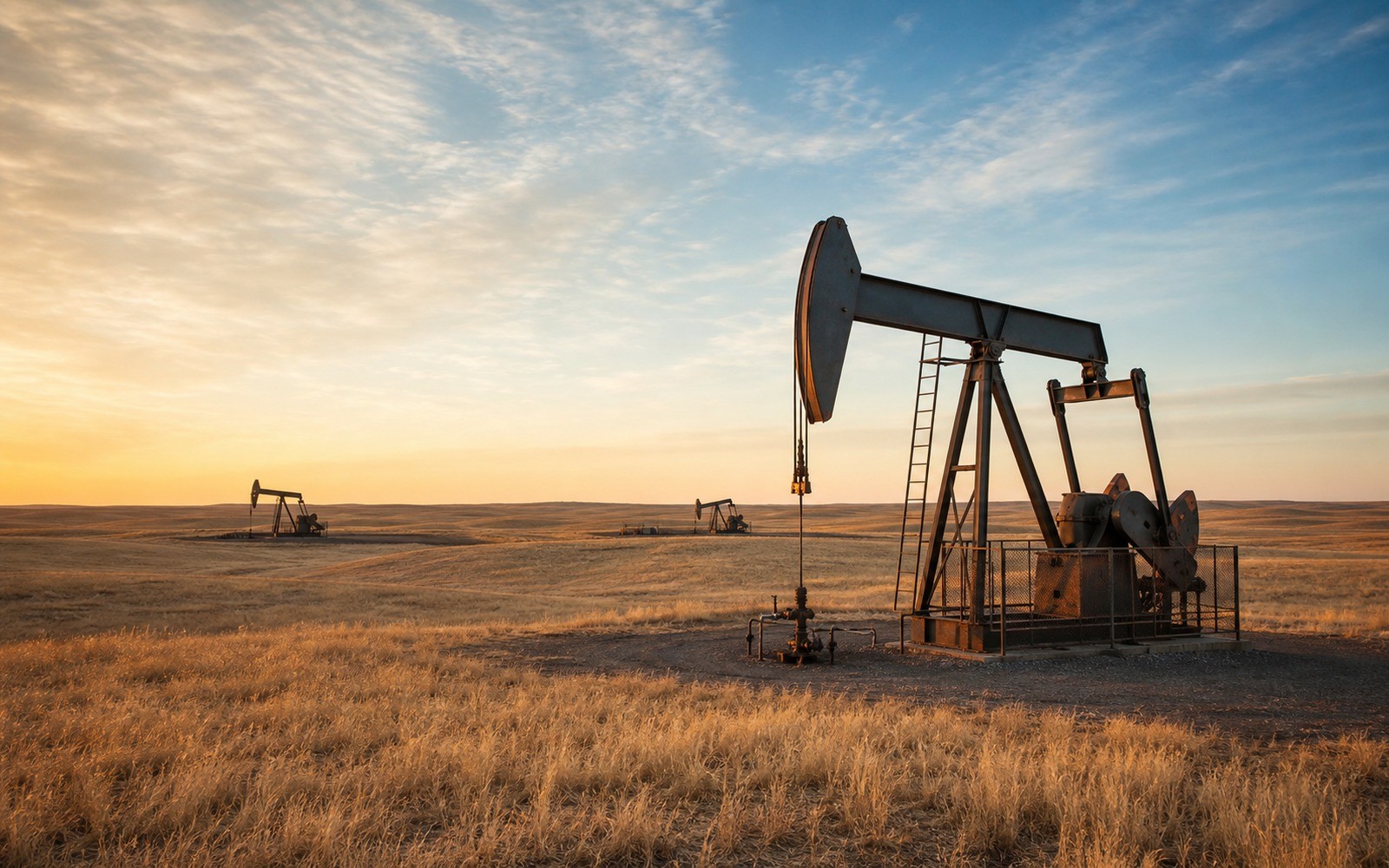
Sell Mineral Rights in Richland County, MT
If you want to talk about the Montana side of the Bakken honestly, you start in Richland County, because this is where the whole play actually began.
Most people think the Bakken boom started in North Dakota. It didn't. Elm Coulee Field, discovered in Richland County around 2000, was the first place anyone drilled the Bakken horizontally at real scale, years before Williston became a household name. That gives this county a genuinely different mineral history than the rest of Bakken MT — this isn't edge-of-play speculation, it's core acreage with two decades of real production behind it.
What that means for a mineral owner today is a maturity question more than an activity question. A lot of the original Elm Coulee wells were drilled between roughly 2000 and 2006, which puts them fifteen to twenty-five years into their production life. Horizontal Bakken wells decline steeply in the first few years and then settle into a long, low tail. If your family's interest has been receiving smaller checks than it did a decade ago, that's the well aging, not necessarily a sign anything's wrong.
Two generations of Bakken wells on the same acreage
Because Richland County was drilled early, a lot of the original spacing has since been infilled with newer wells using modern completion techniques, sometimes on the very same units as the original Elm Coulee wells. That means a single mineral interest here can be tied to a mix of a mature original well and a newer, better-completed one, which complicates the decline picture in a way that actually matters for valuation. We look at the whole unit's production history, not only one well's number.
Sidney, Savage, and the rest of the county
Sidney sits at the center of the county's oil economy and saw real Bakken-boom growth through the 2010s. Savage and the smaller communities to the south have their own pockets of Elm Coulee-era development, sometimes quieter than what's around Sidney but no less real. We check the specific section, not only the town name, before we say what an interest is worth.
Title complexity from twenty-plus years of activity
Twenty-plus years of leasing, re-leasing, unitization, and pooling in Richland County means the deed chain on an active mineral interest here can be genuinely complicated — original leases, amendments, unit agreements, sometimes multiple operators over the life of a single well. We do that work ourselves, pulling everything from the Richland County Clerk and Recorder in Sidney and cross-checking it against Montana Board of Oil and Gas production records before we make an offer.
What decline actually means for your check
A well that produced a strong royalty check in 2012 is very likely producing a fraction of that now, purely from natural decline, regardless of commodity price. We explain that math plainly rather than let a family assume a lower recent check means something's being mishandled. Understanding where a specific well sits on its decline curve is the single biggest factor in what we can offer for an interest tied to it.
How the 2010s boom reshaped the county without changing the subsurface story
Sidney and the surrounding towns grew fast through the boom years, with workforce housing and new infrastructure built to keep pace with drilling activity. That surface-level growth ran on its own timeline, separate from the underlying decline curve of the original Elm Coulee wells, which followed the geology and the completion techniques of their era regardless of how busy the towns above them got.
We mention that distinction because families sometimes tie their expectations to how active the county felt during the boom rather than to what a specific well or unit is actually producing today. Those are two different measures, and only one of them determines value.
Heirship across a well-documented but complicated county
Because Richland County has such a long, active leasing history, we regularly find mineral interests split among several heirs from an original family severance, sometimes further complicated by multiple pooling or unitization agreements layered on top over the decades. We buy directly from an individual heir's confirmed fractional share and do the work of untangling the rest of the chain ourselves.
MONTANA RECORD CHECK
Resolve the Record Question Before the Deed Is Written
Each answer points back to a county instrument, legal description, paid line, spacing record, production record, or written term that can be checked.
Is Richland County really part of the original Bakken discovery?
Yes. Elm Coulee Field here was drilled horizontally around 2000, years before the North Dakota boom, making this genuinely core Bakken acreage rather than an edge play.
Why is your royalty check smaller than it was ten years ago?
Almost certainly natural well decline. Horizontal Bakken wells drop steeply in early years and settle into a long low tail — that's the well aging, not a sign of a problem.
Could your interest be tied to more than one well?
Yes, common here given decades of infill drilling on original Elm Coulee-era units. We look at the whole unit's production, not a single well's number.
How complicated is the title work in Richland County?
More than most counties, given the leasing, unitization, and pooling history that's built up over twenty-plus years. We do that work directly through recorded county and state records.
Is Sidney the only active area, or does it extend into smaller towns?
Activity extends south into Savage and other smaller communities, though it varies section by section. We check your specific parcel before quoting.
Does the county still feel as busy as it did during the 2010s boom?
Not in the same way — that was a surface-activity peak tied to drilling pace, and it's settled since. It doesn't directly reflect where a given well sits on its decline curve today.
Your family's interest is split among several heirs — can you still buy your share?
Yes. We buy directly from an individual heir's confirmed fractional share without requiring the rest of the family to participate.
ADJOINING RECORD CARDS
Carry the Same Tract Into the Next Review
Keep the legal description, ownership fraction, paid decimal, and open record question from this tract in view while reading these adjoining records.